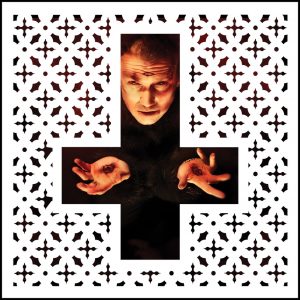
In my books, Kingcrow’s Hopium is definitely a candidate for the best prog album of 2024.
Kingcrow are an outfit from Rome, who are a new name to me despite a couple of critically acclaimed releases (Phlegethon from 2010 and The Persistence from 2018). They started out playing straight forward prog metal, and over the years their sound has accrued different influences – progressive, ambient and alternative rock. Porcupine Tree, Radiohead, and Leprous are bands that are cited as current influences, and that trio gives you a fair idea of what to expect here in Hopium.
The opener Kintsugi is a superb way to kick things off. After a short crescendo it bursts into an unexpected synth driven groove that runs through the track. It’s certainly reminiscent of Leprous. Diego Marchesi might not be at the same level of vocal intensity as Einar Solberg, but there are similarities in his phrasing and in the use of obscure and dark lyrical content. In Japan, Kintsugi is a pottery repair technique that uses powdered gold that rather than hiding the break lines embellishes them. Hence, it can be seen metaphorically as a sign of human resilience and how we create something stronger out of pain and trauma. So, there’s definitely some thought gone into these lyrics.
The next two songs are also strongly synth driven (and Leprous influenced). Glitch lacks the instant appeal of Kintsugi, and so does the longer Parallel Lines but this latter track is the first strongly progressive piece we hear. It’s an unusual track with some disorientating effects thanks to the complex rhythms, plus some striking contrasts such as the pleasant 10cc style vocal harmonies that pop up out of nowhere. There is a short Floydian section at the midway mark before an increasingly menacing riff takes over. That then stops suddenly, and a short quiet coda closes the song. It’s not an easy piece to describe or categorise, but it’s a gripping seven minutes of music.

The short New Moon Harvest appears to offer relief after the intensity of Parallel Lines. Sparse piano supports a lovely melody, and forward momentum builds with the entry of the drums and then soaring synths in the second verse. After a short guitar solo, you expect one last chorus to cap the piece, and we do get that, but with forceful drums having accelerated the pace and broken the regular rhythm, that conclusion becomes something unsettling and inconclusive. Losing Games has a similar ambiguity. It has a bustling indie feel to it but the cheerful mood contradicts the chorus line (‘Why don’t we smile again’) before accelerating into more aggressive and frenetic riffing. The ending with the constant mechanical repetition of ‘Now the curtain has fallen’ is downright sinister.
White Rabbit’s Hole takes the pace down, mixing a Radiohead-style minor key lament with a more dynamic synth-driven chorus. This is another longer seven-minute piece, and to be honest it drags a little until the brilliant last two minutes when the lethargy is cast off in favour of a faster pummeling rhythm and an impressive wall of sound. The following Night Drive begins with a quiet hypnotic soundscape, and that alone could have made a superb song, say in the style of Fleetwood Mac’s Brown Eyes. Instead, its development into a heavier guitar-riffing piece dispels the magic a bit, which is a bit of a shame.
Vicious Circle takes us back to Einar Solberg territory before the longest piece, the title track closes the album. Did I say Diego Marchesi can’t sing as intensely as Solberg? Well, here he certainly matches him with a superb vocal performance that is the centrepiece of the song. After three minutes of uneasiness, the song gets into a fine synth-driven groove, eventually arriving at a cataclysmic climax.
Do you like your prog albums to finish in an overwhelming climax or quiet reflection? Kingcrow give you both options since the that title track closes the vinyl version of album in epic style, but the CD release has a bonus track called Come Through. It’s a beautiful wistful piece, and the warmth of the acoustic guitars and organ comes as a relief after the dark intensity of the title track and most of what has gone before. My own personal preference is for the CD version.
Hopium is an album that benefits from repeat listens. Yes, there are a few strong hook lines that grab your attention immediately, but most tracks are complex enough that new nuances are revealed on each listen. In my books, Kingcrow’s Hopium is definitely a candidate for the best prog album of 2024.