
‘I think if there is something definitely common about the Wakeman DNA, it is the desire to be ‘progressive’, not in the prog rock sense necessarily, but certainly in the sense of moving the music forward. It’s interesting that the way you started the interview about the album was ‘it wasn’t what I expected’, because people say that to me all the time! I like to move on from one thing to another, and possibly to my detriment at times because people don’t know exactly what they’re going to get so it might make them more reluctant to try it.’
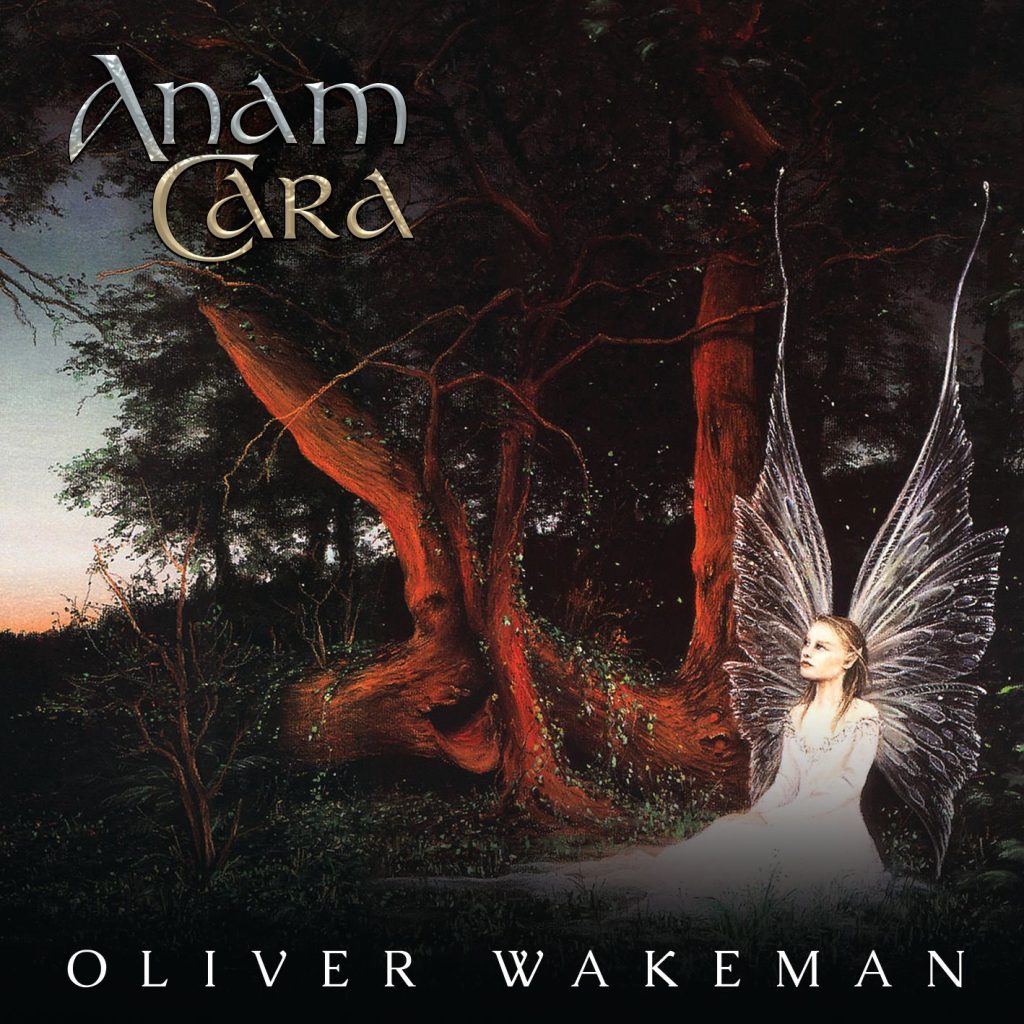
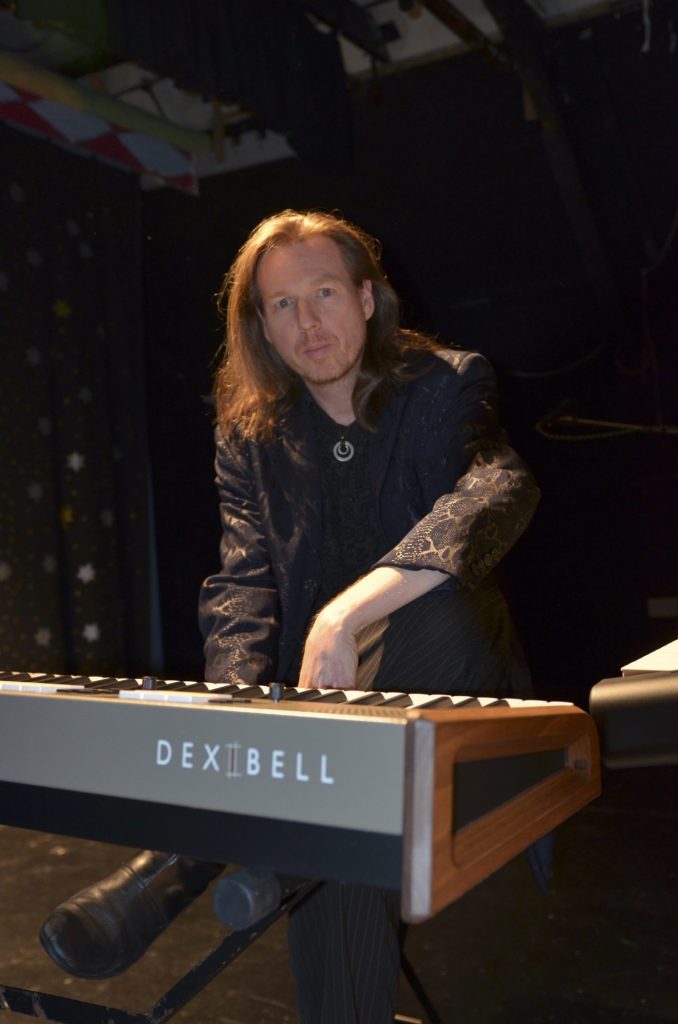
Keyboard maestro Oliver Wakeman (elder son of Rick, of course) has certainly had plenty of irons in the creative fire over recent years, with stints with Yes and The Strawbs plus a collaboration partnership with Gordon Giltrap among them, but he has now stepped away from those collaborative environments and released his new solo album Anam Cara. In fact, it is astonishing to realise that it is now almost two full decades since his last release solely under his own name – the instrumental album Mother’s Ruin from 2005. Anam Cara, by contrast, is very much a vocal-led recording – a crossover between Celtic folk-rock and the progressive influences which are a Wakeman trademark, the album features the vocal talents of Hayley Griffiths, herself a veteran of that particular Celtic muse. I spoke to Oliver recently, and I began by asking the obvious questions regarding the Gaelic album title and the direction he has chosen to take for this release, which is not one that I expected…
‘The phrase ‘Anam Cara’ translates as ‘Soul Friend”, he explained. ‘The album itself isn’t a set of love songs, but it does have a theme in as much as the songs are all about relationships and human interactions, and they all tell their own story. I thought the ‘Soul Friend’ idea fitted that very well, but it can also relate to the fact that musicians tend to become good friends very quickly when they work together – you have to trust each other, and there is that element of shared camaraderie about it – so I thought that ‘Anam Cara’ fitted all of those things quite well. As regards the Celtic folk influence, it’s interesting that you say you weren’t expecting it, and I guess perhaps people might not, but it’s not new ground for me. When I did the Three Ages Of Magic album back in 2001, that had all of the pipes and whistles and various Gaelic instruments on it, and I suppose I got the bug then in a way. That was an instrumental album of course, but it did plough a similar furrow. After that I did the Hound Of The Baskervilles thing with Clive Nolan, which was much darker and more atmospheric, and then Mother’s Ruin which was very much a rock band album. Since then I’ve done various new age sort of albums, the Yes and Strawbs work, which of course covered the very progressive stuff and the more folky material, and then I did the Ravens And Lullabies album with Gordon, which was a sort of mix between acoustic guitar and rock and which showcased the playing a lot. When it came to doing this new record, I thought about what I wanted it to be, and the way it came about is that I never tend to write to order, you see – I write and put the songs in sort of buckets, labelled ‘rock’ or ‘progressive’ or ‘folk’ or ‘instrumental’ or whatever, and when I want to record something I see what I have in these buckets, and what sort of a theme there might be. I thought it might be nice to explore that Celtic folky direction, and I had quite a bit of material ready, so it came from there. I knew Anne Sudworth really well, who did the Three Ages Of Magic artwork, and I thought her work would be perfect for that kind of thing, and she kindly agreed to do the art for the album.’ [Through sheer coincidence, artist Anne Sudworth actually went to primary school with this writer! Small world indeed…]
Getting Hayley in was a perfect fit, I suggested, with that Celtic thing being right in her particular wheelhouse as it were. ‘Yes, definitely. I’d worked with Hayley briefly a while ago doing sessions for another project which hasn’t come out yet, and I knew she had a terrific voice. I had a couple of singers in mind for this album, but then I heard this album of Celtic material that Hayley put out a little while ago [the Far From Here album, released at the same time as the Melanie rock album], and I thought it was just what I’d been looking for. So I read up a little more of her biography, and discovered that she had done the Riverdance stuff in the past, and everything about her just put her head and shoulders above anyone else I had considered. I wanted someone who had the range and versatility to go from a mature sound to a younger, more ‘girly’ thing. who could sound angelic when needed but also put a bit of gravel and power into her voice, and she ticked all of the boxes.’
We’d talked about the folky feel to the album, but there are a couple of very much more ‘proggy’ tracks in there with the two longest pieces, the romance-cum-spy epic Marble Arch and the closer Golden Sun In Grey. Marble Arch is an intriguing one lyrically, I suggested. ‘Yes, it is I suppose. Marble Arch is actually based on a short story I wrote when I was younger, about a love triangle between a scientist and two spies; the female spy is his girlfriend and the male spy is his best friend. They’re both trying to use those relationships to get secrets from him, and one day he’s left alone when she doesn’t meet him under the marble arch as they agreed – meanwhile, the male spy is realising that their friendship is more important than these secrets, but the female spy is more ‘no, I’m spying for my country’. They fight over their respective ideologies, while the scientist is left standing alone under this marble arch. I’d tried a few times to turn it into a song, but it never felt quite right, but when I was preparing this album I thought I’d give it another go, and everything fell into place. I found myself inspired, and I started writing extra bits and adding sections, and pretty soon it had turned into this piece which goes through several different styles of music along the way. It’s all styles which tell the story though; it’s sort of a heartfelt rock thing at the beginning, then later when the two protagonists are fighting next to a jazz cafe the music turns more jazzy to reflect that, and then it’s heavier rock while they fight. Finally after that scene, it goes to just acoustic guitar and violin, as if two buskers are playing where this fight has happened the night before, with one of them not surviving it. I really got quite excited by it, the way the music tells the story, so I enjoyed that a lot. The other you mentioned, Golden Sun In Grey, is a song which I’d always enjoyed, even in demo form – and what I thought was, well if I can enjoy listening to a demo with me howling over the top of it, then it has to have something! There is a lot of great musicality on this record, but it’s not musicality which is thrown in your face – it’s all about the songs first and foremost. My rule was that if a song didn’t work melodically when stripped right back to acoustic guitar or piano, with vocals, then it wasn’t going to work for the record. And with Golden Sun In Grey, the pacing of the song allowed me to build to an emotive climax, and to really go to town with the violins and the whistles to create the atmosphere. In fact, I really struggled not to put a part in for a big Moog solo – I’d done this gentle piano solo part, and part of me was going, it’s the last song on the record, get a Moog section in there! But I stopped myself, I took off my keyboard player hat and put on my record producer hat, and the producer hat put its foot down and said no, if you try to shoehorn something in you’ll destroy the way it’s built up organically, don’t do it. So I managed to hold back, but it was difficult!’
The historically-inspired song The Queen’s Lament is a very powerful lyric, about a queen caught having an affair when she gets too brazen and overconfident, and being sentenced to execution by the king. It had clear echoes of Henry VIII (and of course Rick’s Six Wives album), so I offered a punt about whether it was about Anne Boleyn, but Oliver put me right on it. ‘No, it’s actually Catherine Howard – it had to be one or the other as the two beheaded wives of course. I did think, can I really do this and put a song about Catherine Howard on, with Dad’s Six Wives album in the background, as people are obviously going to go there. But it’s actually a very different piece musically to that album, and it’s quite Tudor in feel, so I thought there was enough to separate the two. It’s a story about how the young Catherine was reputed to have had dalliances outside her marriage, and when Henry found out she thought he would forgive her. Of course, Henry wasn’t exactly known for being the most forgiving type of guy, so he sentenced her to death. And when she ended up alone in the Tower she was naturally terrified and didn’t know what she could do. But then she realised that the only thing she had control over was the manner of her death, and her being able to die like a Queen. So she asked for the executioner’s block to be brought to the Tower so that she could practise walking to the block and be able to die with dignity. I read about it, and thought it was such a fascinating slice of history that it deserved to be told as a story, so what I did was that first I wrote the verses going through the stages of her time, but in between each of them is a musical refrain. The first time this is sung by Hayley alone, but what I wanted to do was to build it up through the song to represent more people showing support for her, so the next time there is a second voice joining Hayley in it – which is actually my wife singing incidentally. That’s supposed to be her lady-in-waiting, being very impressed by her character, and next time a second lady-in-waiting joins in – which this time is Karl Groom’s daughter. Then a male voice joins, which is one of the prison guards, who is impressed by the way she is holding herself – that’s my son in fact. And by the end there is a whole sort of choir, with all of the musicians joining in singing with her, as this groundswell of support, which I thought was such a powerful way to get the point across, that even someone in their final days can make those days, and her own death, really count for something, which is inspiring really – and it taps into the ‘soul friends’ thing again, with all of the people coming together. I actually played a harmonium on it, which if you haven’t seen it is an instrument where you have to keep using these pedals to play it, and of course they aren’t all that common. so I ended up playing it at John Mitchell’s studio – but the snag was that it wasn’t even in the music room itself, he had it out in a hallway, so I couldn’t even hear the backing music playing as I did it. All I had was John shouting a count to me through a window so I could stay on the beat, and we had to join it up later! But it worked well, and it was certainly good fun…’
That track certainly is a strong example of Hayley getting totally in character, inhabiting the role of the Queen as she goes from carefree to cautious to terrified and finally to dignified defiance, and I put this observation to Oliver. ‘Yes, that’s right’, he agreed. ‘What I did with Hayley was that before we started I sent her the lyric sheets, but also before each song was the story, and the details about the character she was portraying. I told her for each song what effect we were trying to achieve, and what the emotive pull of each particular piece was. The really good thing about that was that firstly it meant I was able to give the directions for what I wanted the result to be, and most importantly that I had someone who was good enough to really pull it off. So yeah, she was brilliant’.
The album is peppered with well-known names – Scott Higham on drums and Troy Donockley on the pipes and other traditional instruments, to name a couple – but one name which was new to me was David Mark Pearce, who contributes some extremely impressive guitar work throughout the record. I asked about him, and how such a talent had managed to escape my notice! ‘Ah, now David has worked with me for a long time. I first met him around 2001 I think – we’ve known each other for ages – and he was an engineer at the time, and he did a new age album that I recorded back then. Anyway, that morphed into him joining what would become The Oliver Wakeman Band on guitar, which was the band which recorded Mother’s Ruin, and he played guitar on that and came on tour with the band as well. After that I sort of went off to do Yes, and other things, and although we always kept closely in touch as friends, there weren’t as many opportunities to work with him as I would have liked. Obviously, when I’m working with Steve Howe in Yes there’s no need for another guitarist, and the same when I worked with Gordon Giltrap of course. He did play on the Dark Fables album that I did with Clive, because we used a number of different guitarists on the projects we did together. He also played on some of the things I’ve done with Rodney Matthews, and I’ve played on a couple of projects of his, so we’ve always been working together when we’ve been able to. On this album, I had Oliver Day doing the acoustic guitar, and lutes and that sort of thing, but he is a very different sort of player to Dave. Oliver is a very technical, trained classical guitar player, whereas Dave is all about the feel and the emotion, and what he did was to send me these parts he’d recorded, and I would go through suggesting things, like ‘that’s a good bit, join that up with that’, or ‘ there’s a bit where you can really go for it’, and he is really good at taking direction like that, he worked with me to achieve the right emotive feel for each part of the record. His guitar on Golden Sun In Grey is so good – basically I told him ‘right, this is your Dave Gilmour standing on top of the wall moment, I want you to just wring every bit of emotion out of that guitar neck that you can’ – and he certainly delivered. What’s really good about working with a musician who is a good friend is that it’s comfortable, and there’s no competition or insecurity or any of that – and of course you can say when something isn’t quite right without fear of offending them, so it was a great pleasure to do’.
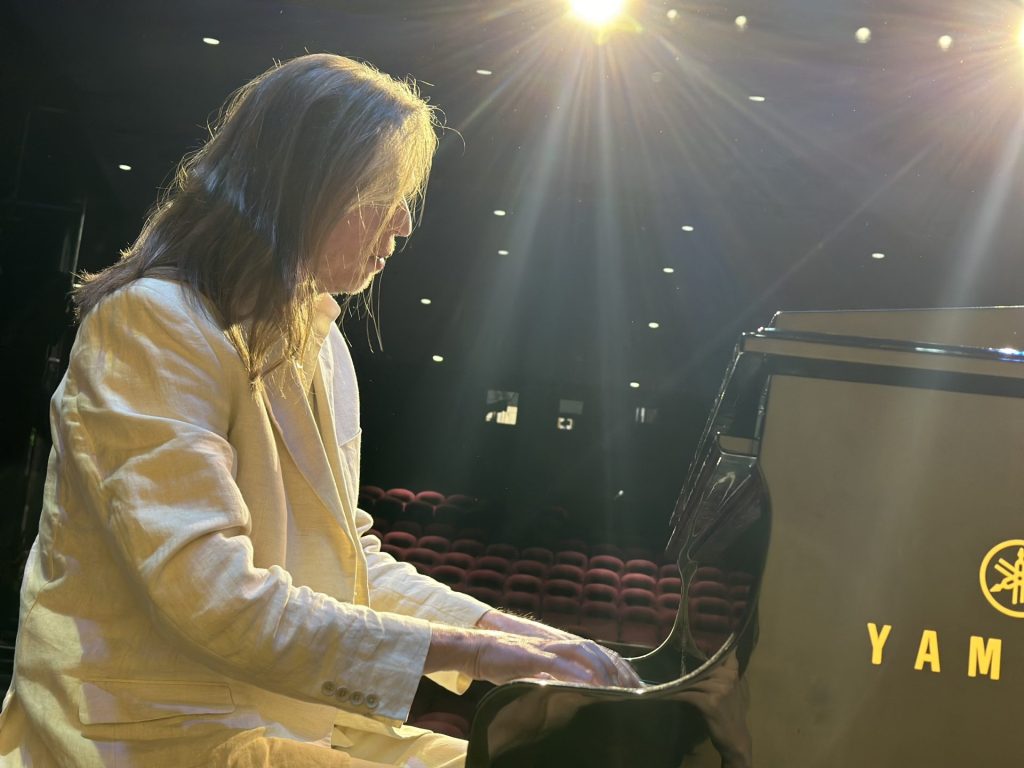
One thing that I liked about the album is that, while it has all of the Celtic slant to it, it is always tempered by the familiar keyboard sound, which I suggested has ‘Wakeman’ written through the middle like a stick of rock! I remarked that he must have grown up with it in his DNA, as it is such a recognisable thing, and he had to consider this for a moment. ‘Well, I suppose it must be really. You see, the thing is that people have said to me ‘oh, it must have been great having your dad teaching you to play piano’, and the strange thing is that he didn’t really do that. In fact, the first time we played together was in 2005 when I was 33, and we haven’t done it very often since – and I like that, keeping that separation. I’ve always said that I wanted to avoid being too tied to Dad, almost like his employee, because I wanted to stand or fall on what I’ve done. It’s interesting what you say about the sound, it’s not something I really think about. If anything, I think it’s a matter of phrasing as much as anything, that’s something dad was always so good at and I try to work on that as well – but maybe you’re right, maybe there is something of a DNA thing there! In fact, I think if there is something definitely common about the Wakeman DNA, it is the desire to be ‘progressive’, not in the prog rock sense necessarily, but certainly in the sense of moving the music forward. It’s interesting that the way you started the interview about the album was ‘it wasn’t what I expected’, because people say that to me all the time! I like to move on from one thing to another, and possibly to my detriment at times because people don’t know exactly what they’re going to get so it might make them more reluctant to try it. It’s not like a Dream Theater record, or a Genesis record or something, where they have their sound that they have developed, and you know the sort of thing you’ll get. Don’t get me wrong, mind you, I love that as a listener – I would be disappointed if a band I really liked like Styx or someone suddenly made a completely different album, but It’s just in me to move around and develop like that’.
The mention of Oliver’s time in Yes earlier prompted me to make the point that I believed at the time, and still do, that the decision by the band to replace him with the returning Geoff Downes was a mistake, and a lack of long-term thinking. Aside from his considerable ability as a player, the sense of continuity that the name Wakeman would have had going forward, especially now that Chris Squire and Alan White are no longer with us, would surely have been an important link with the band’s history. I asked Oliver how he felt about that split now, and he was very honest. ‘Well, that’s very kind of you to say so. It was Trevor Horn coming in really that led to it – as soon as he got involved with the writing it was clear that he wanted to work with Geoff again, and he really did lobby for that. I’ll admit it was a very hard thing to get over, and it absolutely crashed my world for a while, because I’d put everything into working with Yes, and we were doing some really interesting stuff. The worst of it was that it was actually me who suggested Trevor get involved in the first place! When we started working on the record [Fly From Here], I just said to the guys that, as we didn’t have Dad, or Jon, we should bring in anyone we could to make it a great album, and I said ‘wouldn’t Trevor Horn be a good idea’. Now, I fully admit I’d like to go back in time and kick myself in the leg while I was saying it, but that was it! I do remember we went to Trevor’s house in LA, and played him the demos we’d made, and he picked out a number of songs as being particularly good, and I was delighted that all of mine were in there, so I was really pleased that he liked my stuff. Of course, it didn’t happen, but the guys were good enough to give me those recordings back later, and that allowed me to do the From A Page record and get them released. I was really glad that came out, because it allowed people to hear that we were very much a creative force at the time, and in fact a number of Yes fans have said to me after listening to that record and also Live In Lyon that they didn’t give the line-up with me and Benoit David enough of a chance, because in retrospect it feels like perhaps the last genuine organic development of the band – and that really gives me pleasure to hear that we are appreciated now. When the response to From A Page and Live From Lyon was so positive, it really validated my time in the band, if you like – because when something like that happens, and you get shunted out for someone else, you can’t help thinking ‘did I do something wrong? Weren’t we good enough as a band?’, it’s human nature. But I think you can hear that we really did sound good, and gelled well together, and we still had something to say with the new material. It’s lovely to be a part of Yes’s live and recorded history, and I think the fans generally realised it was more of a political decision. If we had stayed together I think the next record would have been a proper big, over the top thing, very ‘prog’ if you like, pushing the boat out – because that’s the direction we were heading in. We’d been talking about doing Vivaldi in a Yes style, and I remember sitting with Steve and working out possible arrangements for one of the four seasons, and where all of the instruments would go and things. It was really exciting to be involved in that, it was the sort of thing that from the outside I would have wanted Yes to do, so to be inside and being a part of that development was great. It’s a shame that never came to fruition. But I did thoroughly enjoy my time with the band, we got on great on tour, and I spent a lot of time with Alan – who was just ‘Alan’, and you forgot just what a great music career he’d had, the John Lennon stuff before Yes, and all that. So it was a great time, and I don’t regret it for a second’.
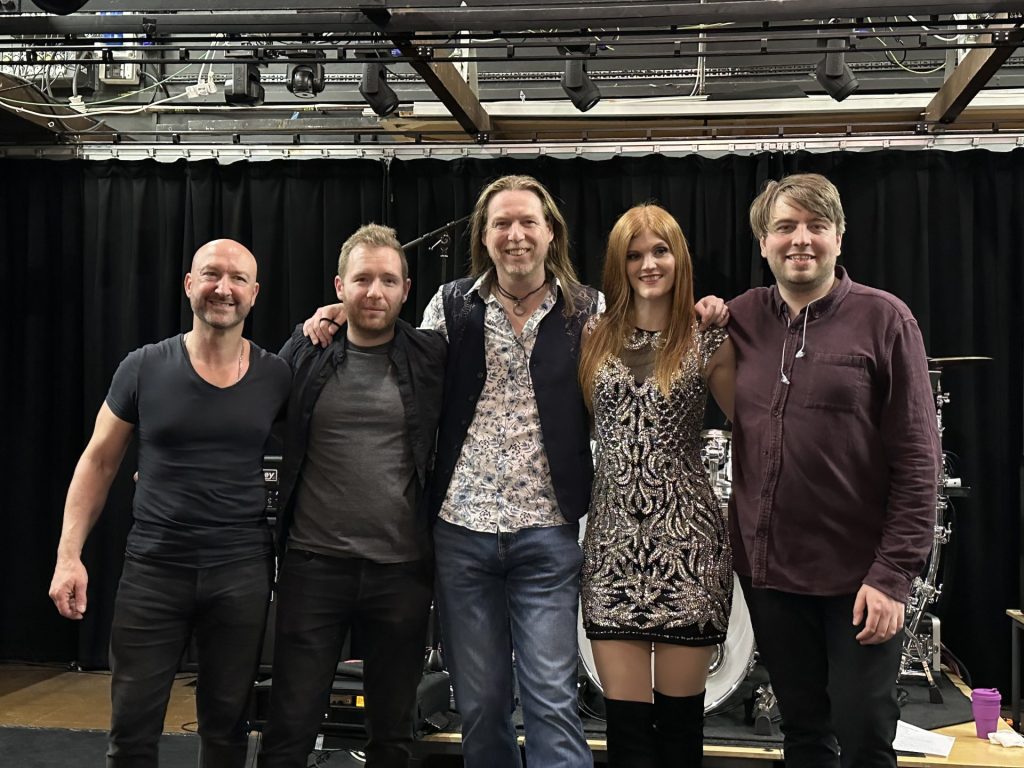
To wrap things up, we mentioned live work to promote the Anam Cara album, and it’s something Oliver is very keen to do. ‘Absolutely. We did one show, the festival headliner at Winter’s End, and it was great. It almost became a disaster, because we had a rehearsal room booked for the Friday and Saturday, but overnight on Friday something had happened with the railway line I think, and they’d closed the roads and made it a 30 mile diversion. Not only that, the drummer’s car broke down! So we ended up losing most of the day, and only had an hour or two to tie things together, but the show was fantastic, it went over well and everyone played brilliantly. I’m desperate to play with the guys again, and I definitely want to arrange it, hopefully next year is my intention. I’d like to do a couple of shows, one in London and one further north initially, and see how it goes. It would be the Anam Cara band essentially, and we’d be looking at doing the album and also the From A Page material. But absolutely, I’m planning to make that happen’.
I for one can’t wait for that to become a reality. It’s certainly good to have Oliver back at the helm of his own band, and the future is looking rather bright…




No comments! Be the first commenter?