
Overall, this is a compilation which gives a fine overview of a band who are, like so many others, well known for a couple of songs yet unfairly forgotten about otherwise.
When the subject of the horn-driven sound of Blood Sweat And Tears comes up, there is always one obvious subject – that being the comparisons with Chicago, and which one is preferred. It’s understandable really – the bands started around the same sort of time (BS&T actually released their first album the year before Chicago), and the use of the horn sections as part of a large band membership drew unavoidable parallels. Despite the name sounding rather more like a heavy rock band, Blood Sweat And Tears were originally brought together as a project by Al Kooper, the highly respected session keyboardist who had played on Bob Dylan’s groundbreaking Like A Rolling Stone among many others, as he wanted to explore the idea of horns within a mixture of styles including rock, blues, soul, pop and jazz. His involvement only lasted for one album, 1968’s Child Is Father To The Man, and it could be said that the band did not fully refine their sound until after his departure, on the next album, the hugely successful self-titled Blood Sweat And Tears in 1969. This two-disc compilation leans quite heavily on those albums, and to a lesser extent the following BS&T 3, but there is material here from right through the first half of the 1970s which shines a light on quite a few corners which may be unexplored by the casual listener.
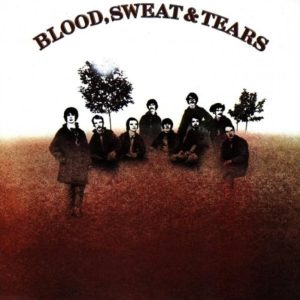
Opening with the pre-debut album Refugee From Yuhupitz (which is rather unrepresentative, being essentially jazz with some tricky time changes), we only get three tracks from the Child Is Father To The Man album, of which the bluesy I Love You More Than You’ll Ever Know is the pick, featuring some great guitar work from Steve Katz, though House In The Country is a decent enough selection as well. The real meat of the first disc comes with the self-titled second album, from which come no less than seven of its ten tracks (helpfully omitting the twelve-minute Blues Part II; note that there is no Part I just in case your desire for blues is still unfulfilled). To be fair to the compilers, this is a fair decision, as not only was the album a huge commercial success and reputation-builder for the band, it also contains some excellent material, with the band really starting to find their feet and their identity. There are two huge hit singles here, one of which of course is the song which gave this collection its name – Spinning Wheel. Bizarrely giving me an unshakeable earworm of a decades-old UK wallpaper commercial which adapted the song, this is the full version which is certainly more interesting for the more progressively-minded listener than the edited hit. For all its overfamiliarity, it remains a very, very good song, delivered well by the incoming vocalist David Clayton-Thomas, who also wrote the song and would come to define the band’s vocal sound for most of their career. The other hit is less impressive to these ears – the slick and sickly-sweet You Made Me So Very Happy fails to make me happy in any way, but I can see why it would be a hit. Elsewhere though, there is much better material: Steve Katz’s Sometimes In Winter is a genuinely intriguing song, while there are some definitive covers also. Laura Nyro’s And When I Die is absolutely as mad as a box of frogs as it veers wildly from one style to another, but somehow it works, and the stab at the Traffic song Smiling Phases is also a good one. Best of all however is the six-minute, intricately progressive reworking of Billie Holliday’s God Bless The Child, which is the best of the pile. As a bonus, there is also an excellent non-album track from the same period, Children Of The Wind, which more than deserves its place here without doubt. The BS&T 3 album features nearly as prominentlywith five tracks, and they are also mainly good stuff. The Goffin/King song Hi De Ho can be glossed over, as it is almost as irritating as its title, but elsewhere is better fare. The full Lucretia MacEvil (split into two parts on the original album) is another strong Clayton-Thomas contribution, while Joe Cocker’s Somethin’ Coming On does as well as it can considering it doesn’t have Cocker’s irreplaceable voice. Laura Nyro gets another look in with He’s A Runner, but the best moment comes with another Traffic cover, this time 40,000 Headmen, which closed the original album as well as this disc – it’s a great version for sure.
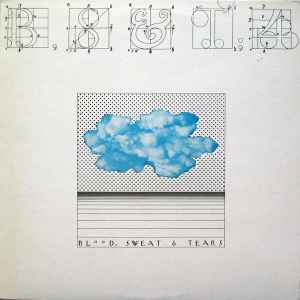
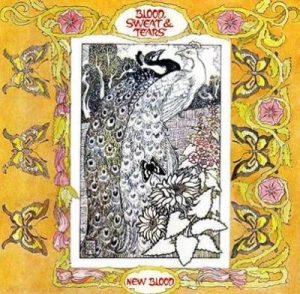
Received wisdom is that the band deteriorated sharply after this point, but this is not really borne out by the second disc here, which is surprisingly full of good stuff. 1971’s BS&T 4 gets another five selections, of which Clayton-Thomas’s Go Down Gamblin’ is the winner. Opening that album as well as this disc, it rocks as hard as anything the band ever did, and it sounds as if they are having an absolute ball playing it, Lisa, Listen To Me is also a strong effort, as is Valentine’s Day, with Al Kooper returning to contribute the song John The Baptist (Holy John). A Greatest Hits album followed this in 1972, and partially as a result this is often regarded as a line in the sand where the band lost their mojo, but this theory is not borne out by the selections here. Jerry Fisher replaced Clayton-Thomas on vocals for the New Blood album, but he fills the shoes well. The highlight for me is the beautiful arrangement of the Mann/Weill song So Long Dixie, which skirts with losing its fragile melody, but hangs on to it with a feather touch which is masterful. Some may remember a mid-70s hit single called Romeo by a band called Mr Big (no relation to the 1980s rock outfit), and there is a definite hint of that song in the chorus here which strongly suggests an influence. Three other songs make the cut, but two at least are great; Goffin And King contribute another, with Snow Queen being a fine work-out, with some brilliant instrumental soloing, and the band take their most decisive step into real jazz-rock fusion with a cover of Herbie Hancock’s Maiden Voyage which distinguishes itself well and gives the band another arrow to their stylistic quiver. As a bonus, a track recorded for the album but omitted called Time Remembered is included here, and it is an absolute corker. A sublime melodic-prog rock instrumental along the lines of Focus, its omission from the album was a scandalous one, and it is very welcome here.
It is at this point that the compilers clearly lose faith in the albums, with the subsequent five contributing only one track each, but there are still some rich pickings here. The albums No Sweat and Mirror Image do not come off well, with Roller Coaster and Tell Me That I’m Wrong both being disposable, but far better is to come. 1975’s New City saw the return of Clayton-Thomas to the band, and also provides us with a superlative track – the band’s version of The Beatles’ Got To Get You Into My Life, which is stunning. Bringing a propulsive energy that neither the original nor the much-praised Earth Wind And Fire cover can match, this is the best I have heard the song done, and joins a select band including Joe Cocker and Spooky Tooth who have surpassed the originals when covering The Beatles. A track from 1976’s In Concert album, Mean Ole World, is shunted to the end of the disc, and works well in terms of showing what a fine band they could be live, if perhaps not the best selection, containing an amount of audience participation which loses some focus; but before that the final album to be represented here is More Than Ever, which more than justifies itself by contributing the stunning ballad You’re The One. Clayton-Thomas’s soulful and emotional delivery is quite brilliant, and the song sidesteps any hint of maudlin sentimentality. The final two albums, Brand New Day and 1980’s Nuclear Blues are sadly not represented at all.
Overall, this is a compilation which gives a fine overview of a band who are, like so many others, well known for a couple of songs yet unfairly forgotten about otherwise. Those Chicago comparisons continue to be interesting, as they show somewhat different trajectories: while Chicago opened up with the wildly adventurous rock of their debut album, but began to sink into pop and balladry after the time of perhaps Chicago V, BS&T might have started off as a rather more safe and less adventurous proposition, but they added more influences to their palette as they continued, and mined the field of jazz fusion more and more as the ’70s progressed. Both bands produced some fine music, but it is good to see Blood Sweat & Tears finally getting some time back in the spotlight as reward for all those years of, well… blood, sweat and tears as you might say!




No comments! Be the first commenter?