
A conceptual work about 20th century history which has deservedly made its own, albeit too small, mark in history, its time for celebration as the 50th anniversary passes us, could not be more appropriate. Essential.
Released in 1975, Past Present And Future was a huge step forward for Al Stewart – so much so that in the following tour programme he described his first four albums as ‘an apprenticeship’, with this one being ‘his thesis’. And as much as that might do some disservice to much of the excellent material on those earlier recordings, he’s not wrong. As well as containing some of his finest ever songs, Past Present And Future is also something of a concept album, with all of the songs having a historical basis, set in differing times in the post-Victorian era, and the final one, the astonishing Nostradamus, concerning the prophecies of that famous individual. It’s quite heavy subject matter, but never heavy listening, as Stewart’s signature lightness of touch with his songwriting making it a masterclass in having as much or as little depth as the individual listener desires. You can sing along to every song here, or you can write an essay discussing them, and still enjoy them as much either way – which is a rare gift indeed. The album comes here as a four disc set, with the original album on the first disc, a live set on the second disc and a new remix on the third, with a DVD also here. But we’ll get to those shortly.

With five tracks, the first side of the original vinyl contains generally shorter songs, with only one – the opener – over five minutes, and it works well as such. That opening song, Old Admirals, still stands as one of Stewart’s finest ever songs, the lyrical wistfulness as he tells the pre-WW1 story of the protagonist who joins the Navy at 14, advancing all the way up to retirement as ‘the old Queen passed away with the new born century’ and the world changed. As the song closes with him retired in a nice house with grandchildren, the happy image is punctured heart-wrenchingly by the closing line about the sadness of ‘Old admirals who feel the wind, and never put to sea’. It’s a feeling that could apply to anyone who has had to give up what they love, be it musician, sportsman or whatever. One only has to look at the tragic fate of Keith Emerson to have the significance of the song’s message hit like a hammer, and it’s my belief that most people of a certain age can think of an example from their own lives and look back with a sigh of nostalgic regret. The song is a work of art which, had it been written and recorded by Bob Dylan or Paul Simon, would be hailed as such.
The remaining four tracks don’t quite hit that height, but there is still excellent stuff here. The bouncy Warren Harding and the introspective The Last Day Of June 1934 (the date of the ‘Night of the long knives’ in Germany which cemented Hitler’s grip on power) are perhaps the least memorable songs here, but they are still beautifully crafted, especially when one looks into the lyrical content of the latter. Soho (Needless To Say) is a mix of almost spoken word verses se against a soaring chorus, with very much of a Subterranean Homesick Blues feel about it, and one listen reveals the similarity to the much later (if not as good) Rock DJ by Robbie Williams. It’s infectious to say the least. In the same vein, Post World War Two Blues is an autobiographical song dealing with the backdrop to Stewart’s own life from the post-war period up to the end of the 1960s, in a similar lyrical style as Don McLean with his classic American Pie (even Buddy Holly’s death and a host of 1960s musical heroes are referenced). The overall style and construction of the song leaves me in absolutely no doubt that Billy Joel would have been very familiar with this before he came out with We Didn’t Start The Fire – Suez, JFK, they’re all in there in a remarkably similar arrangement. It’s a brilliantly effective track to close the first half of the album.
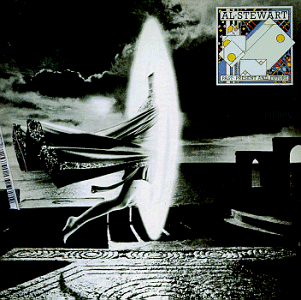
The three songs on the second side find things getting longer, and more ‘progressive’. Roads To Moscow is an exhaustively researched tale unfolding against the German invasion of Russia in the Second World War and its repercussions, all seen through the eyes of a single Russian soldier. It is worth looking into the meaning behind the song, as even with its eight minute duration, the lyrics only scratch the surface and set the visual imagery, with the filling in of the unspoken events in between the verses revealing an astonishing lyrical achievement, with the music matching it for drama and emotional impact at every turn. It’s the second song on the album to go down as a dyed in the wool Stewart masterpiece, and we’re not done yet. The relatively brief Terminal Eyes, deliberately echoing I Am The Walrus, is a more upbeat song (despite dealing with the subject of suicide), shorter and lighter in tone, before the closing ten minute Nostradamus puts the cap on the whole thing. After setting the scene of Nostradamus’s time, it goes on to relate some of his most celebrated ‘predictions’ (which are still hotly debated by scholars to this day). There’s the Kennedys (the three brothers, only two of which will come to power, but all will die before their hour), and the rise of ‘a man named Hister’ in Germany, who will obey no law and preside over a cruel and bloody time, together with many others which space precludes going into. They are obviously rephrased to scan and rhyme, but still retain enough of the feel of the period language to give the song real resonance. Sparse drum and percussion accompaniment joins the strings backing Stewart’s voice and guitar, before the full band come in for the dramatic chorus of ‘Man, man, your time is sand…’, in a perfect example of tastefully effective arrangement. It’s classic number three, and a song which has remained a staple of many, many Stewart setlists ever since. There is one bonus track on the first disc (apart from a couple of unnecessary single edits), and that is a non-album single called Swallow Wind. It’s one I’d never heard before, and it is a great song – short and relatively light, but a delight nonetheless. It could have easilt gone onto the album (replacing, say, Warren Harding or Terminal Eyes), were it not for the fact that it would upset the historical concept. A very worthwhile bonus to have, for sure.
The second disc, a show recorded at a London venue called The Rowff in Summer 1974, is an outstanding find. Featuring superb versions of six of the eight songs from the album, it showcases Srewart’s superb backing group at the time, which was essentially made up of the band Home, including future AC/DC man Cliff Williams on bass and soon-to-be Wishbone Ash guitarist Laurie Wisefield on lead guitar. In fact, Wisefield had just accepted the offer to join Wishbone to replace Ted Turner, as Al informs the audience during the show, but this contributes to the high point on the disc, when Wishbone man Andy Powell joins on second lead guitar for a glorious 10-minute jam on All Along The Watchtower, a must for any Wishbone Ash fans without doubt. A marvellous disc.
The third CD contains a new stereo mix bu the prolific and excellent Stephen W Tayler, and although the original mix is already perfectly acceptable with no complaints, some extra clarity and dynamism is injected into some key parts of the album, and it may well prove to be the favoured listen by many. This mix, along with a surround sound mix and an enhanced version of the original album are all contained on the DVD which makes up disc four, a real audiophile’s delight.
With an informative and thorough booklet including many of Stewart’s own observations, along with the original album sleevenotes and full lyrics to these remarkable pieces, there is no doubt whatsoever that this is the finest way yet to experience a key album, not just in the career of Al Stewart but in the development of English ‘folk rock’ music, for want of a better term. A conceptual work about 20th century history which has deservedly made its own, albeit too small, mark in history, its time for celebration as the 50th anniversary passes us, could not be more appropriate. Essential.


No comments! Be the first commenter?