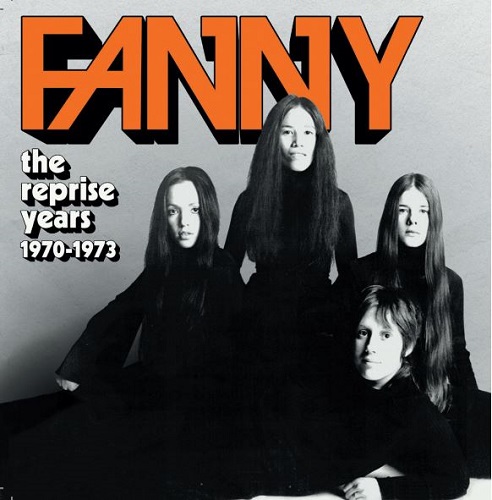
…their artistic peak was brief, and they couldn’t kick on, but everyone from The Runaways to Pussy Riot owes them a debt of gratitude for their trailblazing of the all-female rock band format.
In the December 1999 issue of Rolling Stone, David Bowie is quoted as saying: ‘One of the most important female bands in American rock has been buried without a trace. And that is Fanny. They were one of the finest fucking rock bands of their time, in about 1973.’ That claim seems to jar with Fanny’s near-forgotten status in the history of rock which, even leaving aside the music, should have been ensured when they were the first all-female band to sign to a major label. Yes, people remember The Runaways and others that followed, but it was Fanny that opened that path. This four CD-package includes the four albums Fanny released on Reprise as well as a whopping 36 bonus tracks, allowing us all to judge for ourselves whether Bowie’s eulogising was merited or not.
Sisters June and Jean Millington never actually set out in the mid-‘60s to create an all-female rock group. They were in several outfits, including Wild Honey with (male) guitarist Addie Clement. When Clement left, Jean moved from rhythm to lead guitar, and they briefly continued as a trio (along with drummer Alice du Buhr) and changed their name in 1969 to Fanny. Despite the different slang meanings of that name in the US and the UK, the band name derives from their home which was called Fanny Hill, in Los Angeles.

The last piece in the Fanny jigsaw, keyboard player Nickey Barclay joined in 1970 in time for their eponymously titled debut album. While all four women could write (and sing), it’s interesting how much of that debut album was penned by recent arrival Barclay. She wrote five out of the nine band-penned tracks and contributed to a sixth. Her songs were mostly standard blues-rock, and she added a lot of colour with some impressive Hammond and piano playing. I Just Realised and Shade Me are perhaps the best in this style, but the one that struck out for its originality to me was Conversation With A Cop, a slow soulful ballad with the conversation in question being between a woman out at night who is ’just looking for some place to walk my dog’ and the cop who is suspicious of what she’s up to. The woman’s observation ‘I wonder how it feels to be afraid of everyone you see. I wonder why you keep those nervous fingers on your gun’ seems as relevant today as it was 50-odd years ago.
The two songs written by the Millington sisters have more of a cheerful West Coast feel to them. The Millington sisters also co-wrote Seven Roads with drummer de Buhr, and it’s another highlight. The organ intro sounds like pure Jon Lord and the main song is the first proper riff-driven song composed by the band. It has that ponderous heavy bass feel of Cream, which one suspects is a band that influenced them since they also include a good cover of Badge on this album. There are no stone-cold classics here but it’s a good and varied selection of songs, and it stands up well compared to what most of the male bands were doing around the same time.
The second album, Crystal Ball, was released in 1971. Sound wise, the heavy bluesy elements are diminished and more of a funky R&B style emerges. The album opens with the title track that reached #40 on the US Billboard singles chart. It bops along in an infectious way and has the same sort of cheerful rock’n’roll energy that Abba would leverage a couple of years later. The highlight for me on Crystal Ball is You’re The One, a light rock piece with sparse texture but embellished by some jazzy keys and a fuzzed guitar solo. It reminded me of the simple style Fleetwood Mac would adopt on Tusk. Soul Child is also a strong track, and again Barclay’s keyboard work stands out. The slow-paced A little While Later closes the album well but overall this is a patchy album, with the rather soppy radio-friendly Thinking Of You being the low point.
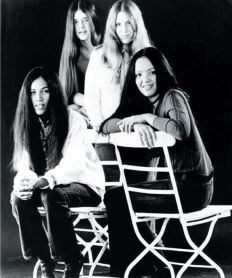
In contrast to the lengthy recording process of the first two albums, 1972’s Fanny Hill was recorded in just two weeks at Apple Studios in London. Despite the tight recording schedule – or perhaps because of it – Fanny Hill is the point where the stars align for Fanny, resulting in a consistently strong album. It’s quite a hard rocking affair with the previous R&B and West Coast influences just about shed (Jean Millington’s Think About The Children being the only lapse). The album opens with a cover of a Marvin Gaye song, Ain’t That Peculiar. It’s a brilliant version, replacing the Motown sound with a bluesy rock’n’roll feel, driven along by Barclay’s piano and Millington’s slide guitar. It only made number 85 on the US Billboard charts which must have been disappointing. Perhaps a better choice for a single might have been Knock On My Door, a strikingly modern piece of pop, again eerily foreshadowing Abba.
Looking at the heavier material, one highlight is certainly Blind Alley, a hard rocker that probably stands out as one of the few times that they’ve (been allowed to) let the reigns lose in the studio and really rocked. You hear Blind Alley and think ‘Yes, I want to see this band live!’ The album production is fleshed out with string arrangements and in some cases horns, most notably in the excellent Borrowed Time, and the epic closing track The First Time, both of which tastefully leverage the horns. Of the quieter material, You’ve Got A Home has some beautiful slide guitar that gives it a country feel and has haunting lyrics about a single mother singing to her child. ‘You may not have a father, but you’ve got a home’ is the mournful hook line.
There’s a cover of the Beatles’ Hey Bulldog which, given the strength of their own songwriting skills at the time, wasn’t really necessary. Oddly, they added an extra verse to lengthen the track, and that was with the blessing of the Beatles. Apparently, this is the one and only such case of the Beatles giving such permission (there’s a quiz question for you!).
Fanny Hill reached number 136 on the Billboard Charts on the week of 22 April 1972. That may seem disappointing for such a high-quality album, and yet if you examine the 135 artists ahead of them, it reads like a who’s who of rock history. There was a hell of a lot of competition in 1972!
Fanny Hill could and should have been the launching pad for greater recognition, but things unravelled quickly and much of that has to be put down to Todd Rundgren being at the production helm for their fourth and final album, Mother’s Pride. Fanny had hoped to have more input into the production for this release, but they were totally excluded by Rundgren. The approach of Rundgren was to remove the harder edges of the band, changing the sound quite significantly as a result. You could look at this positively – Rundgren does highlight some strong melodies, and he does create some interesting textures (for example, the use of the sax). It’s a very modern sound for 1972, but in the process of modernising Fanny’s sound, Rundgren managed to throw out the baby with the bath water.
Mother’s Pride does get underway positively with a good moody rendition of Randy Newman’s Last Night I Had A Dream. I don’t think it’s the best cover on the album though and that prize goes to the slow-paced ballad Old Hat, written by an obscure group called Uncle Dog. Of the band-penned numbers, Is It Really You? has glimmers of the old Fanny but these flashes are few and far between. Tracks such as Solid Gold and Polecat Blues have potential, but you sense the energy has been sucked out of them in the production. One of the more successful outcomes is Long Road Home which has a good Eagles feel to it (a year or two before the Eagles, I should add). It’s not an album that has much to recommend about it, and it’s no surprise that June Millington and Barclay both left after this album.
Of the generous number of bonus tracks in this compilation, the two covers of Holland–Dozier–Holland-penned compositions for Motown are both very enjoyable: Back In My Arms Again, originally sung by The Supremes, and Nowhere To Run, a hit for Martha and the Vandellas. But, of greatest interest are the live performances. Charity Ball recorded at Cleveland is an energy-packed rock’n’roll ride, and the material from Fanny Hill is equally energetic. These live recordings give a glimpse of the rock’n’roll band that Fanny wanted to be but never quite managed to reproduce in the studio. There are a host of other single edits, B-sides and demos too although these are likely to appeal only to genuine aficionados of Fanny.
So, was Bowie’s correct in his claim about Fanny being one of the finest rock bands of the time? In a sense, the answer is yes because he qualified that statement with the date ‘about 1973’. Fanny Hill would have been out for just a few months and Fanny were probably putting in some blistering live performances in 1973. Maybe Bowie was in one of those audiences. Sadly, their artistic peak was brief, and they couldn’t kick on, but everyone from The Runaways to Pussy Riot owes them a debt of gratitude for their trailblazing of the all-female rock band format.