Less celebrated than others it may be, but that personal and professional partnership of Pappalardi-West is gloriously celebrated here, as are the vital pats played by Knight and Laing. Indeed, Mountain were a band whose flame burned brightly but for far too short a time. They, collectively and individually, are sadly missed.
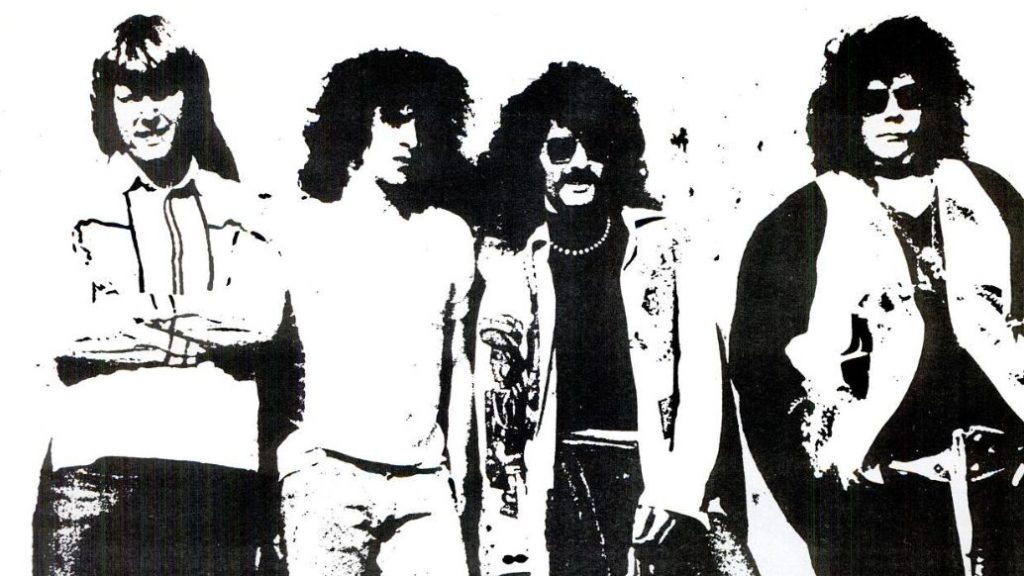
The late ’60s and early ’70s are littered with examples of great bands who could and should have a far greater reputation and public profile befitting their quality, and just as many examples of bands whose careers were far shorter than they should have been, owing sometimes to misfortune but often to their own self-destruction. There are a far smaller subset of bands fitting both of these criteria like the proverbial glove, but if any can be said to absolutely fill that Venn Diagram intersection between those two categories, Mountain would undoubtedly be as good an example as you could find. Appearing in 1969, and playing at Woodstock (an often forgotten fact), the band’s first two albums, Mountain Climbing and Nantucket Sleighride, were twin classics which promised a long and prosperous career of unlimited potential. Sadly, with the usual chemical distractions of the time playing a big part, after two more studio records and a couple of live albums, they were gone, the quality of the work remaining good, but undeniably tailing off. But, for that glorious two or three years when Mountain were at their peak, what was it that made them so special? What was the ‘wow factor’ that they possessed. Well, with the greatest respect to drummer Corky Laing and keyboard player Steve Knight – both of whom were exemplary musicians – the answer really lies squarely in the alchemical pairing of Leslie West and Felix Pappalardi.
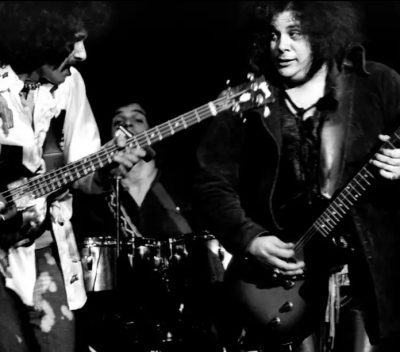
The contrast between guitarist West and bassist Pappalardi could hardly have been greater (even physically, with the huge figure of West set against the far slighter Pappalardi). The two sharing lead vocals, West tended to write and deliver the crushing rockers, his voice a fearsome ‘wounded bear’ bellow which still makes a song such as Mississippi Queen so iconic. Pappalardi, on the other hand, possessed a far more melodic and sweeter-toned voice, and tended more towards songs which suited that beautiful vocal – often more lyrically and musically complex than West’s output, and certainly possessed of impressive subtlety and restraint. The pairing of these two very different styles of both performance and writing somehow came together to make them a sort of musical Yin-Yang, two sides of the same coin which had to co-exist to produce the full value of what they were capable of. They were the Lennon to the McCartney, the Jagger to the Richards or even the Daltrey to the Townshend, and taking either away would (and later did) devalue the whole very significantly. While they lasted, however, they were a glorious mix.
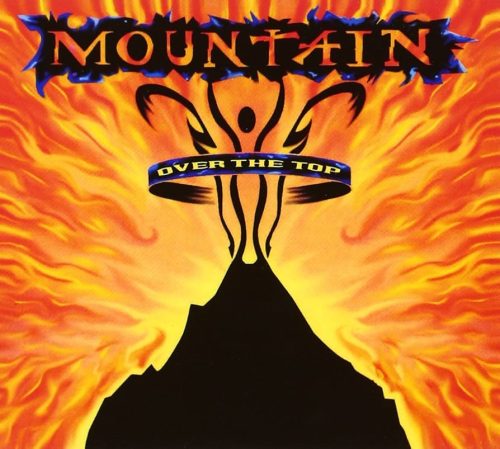
Not a band traditionally well-served by compilations (in the band’s lifetime there was only a lone single-disc vinyl ‘Best Of Mountain’ release to scratch the surface), so this double CD roundup is very welcome (it originally appeared in the 1990s, but I personally have never seen a copy before). Wisely, the set actually opens up with no less than six songs from West’s pre-Mountain solo release (itself called Mountain, coming from his nickname, and from where the band name originated) – the album is often, rightly, thought of as the ‘unofficial first Mountain record’, and with Pappalardi as producer, bassist and co-songwriter the formula is clearly laid down from the off. The album spawned later Mountain stage favourites such as Blood Of The Sun, Long Red and Dreams Of Milk And Honey, and these are all present along with another highlight, West’s softer ballad Because You Are My Friend, demonstrating well how the foundations were laid even before the band officially founded.
While that album is important if slightly rough and ready in places, the Climbing debut was the finished article, and provides no less than seven tracks here. Mississippi Queen is perhaps the highest profile track as far as being a ‘hit’ goes, but it is surrounded by other remarkable high points: perhaps the greatest being the definitive take on Jack Bruce’s Theme For An Imaginary Western, which takes Bruce’s already impressive original and immediately infuses it with its full potential. There’s also Never In My Life and Silver Paper, which would both later appear in a live incarnation, along with Pappalardi’s superb Woodstock homage For Yasgur’s Farm (Max Yasgur being the man who owned the Woodstock land and allowed the festival to go ahead there. It’s a deservedly broad selection, with West’s acoustic tour de force To My Friend being another showing a surprisingly sensitive side to his writing and playing. The really big break was about to arrive, however – as the next album, 1971’s Nantucket Sleighride, proceeded to blow the metaphorical doors off so completely that it remains the band’s highest quality studio recording and contains a number of tracks which are classics to this day.
The title track, of course, is regarded by many as the band’s masterpiece – a Pappalardi song telling a fictionalised version of a true story which utilises a palette of dynamics more sophisticated than anything else attempted by them (a ‘Nantucket Sleighride’ is an old whaling term referring to being towed along at high speed by a harpooned whale). The central riff of the song was famously used in the UK as the theme tune to the popular current affairs show Weekend World in the 1970s, which massively improved its exposure and popularity. That song, as well as no less than seven others are included from the album, including the rampaging Don’t Look Around as well as Travellin’ In The Dark, My Lady and the autobiographical The Animal Trainer And The Toad (arising from a particularly harsh description of Pappalardi and West by one particular music paper!). It is surprising, however, that the Hendrix-dedicated Tired Angels failed to make the cut. Following up from this was the often overlooked Flowers Of Evil album, a record far better than its reputation would often have it. The title track is an acknowledged classic, while Pappalardi’s grindingly heavy Crossroader became a fixture in the live set, but it is also very heartening here to see another brilliant Pappalardi composition One Last Cold Kiss included, as it is often overlooked. It would have been good to see the adventurous Pride And Passion also included, but one cannot have everything! The second side of that album contained a lengthy live jam/medley entitled Dream Sequence, but only an extract of that is used here, the band tearing through Roll Over Beethoven in riotous fashion.
The band split following this, but after West and Pappalardi fronted a different line-up for the Twin Peaks album recorded live in Japan, Laing returned again for the album Avalanche. There was still great material to be had, but not enough of it as the album proved patchy, a fact reflected by the presence of only two tracks here. The outstanding You Better Believe It is a very worthy addition, and the other track included, Back Where I Belong, is also strong, but the omission of Pappalardi’s excellent Sister Justice seems very surprising. The band reconvened in the 1980s, though without Pappalardi, who had shockingly been shot dead by his wife Gail Collins, who had also been his songwriting partner and regular Mountain cover artist. The magic had gone without the two men to bounce off each other, and the four tracks here from the ’80s and ’90s (two of which are unavailable elsewhere) are decent enough rockers without a spark to set them alongside the band’s best work.
One surprising thing about this compilation is the comparative dearth of live material from a band so renowned in that area. The live album The Road Goes Ever On is represented only by the single edit of Waiting To Take You Away, while Twin Peaks offers up only the very oddly chosen Guitar Solo, which is literally that, largely unaccompanied (the credits claim that track to be also from The Road Goes Ever On, but it is in fact from Twin Peaks). Apart from these two, there is a rather baffling choice to include a 19-minute Stormy Monday recorded at the Atlanta Pop festival in 1970, which is about three minutes of the song and 16 of a rather pedestrian jam. One would think that if almost 20 minutes of prime real estate were to be set aside for this, there must have been better available, considering the exceptional expended versions of Nantucket Sleighride which appear on both of the band’s live albums. For all that, this is overall probably the most comprehensive set of the band’s peak material that you can get in one place, and who has ever been completely satisfied by the track selections on any compilation – apart from perhaps the actual compiler!
Sadly, as well as Pappalardi’s far too early demise, and Steve Knight’s death in 2013, Leslie West has also left us as well, passing away in 2020. A couple of years before his passing, I had the honour of interviewing West, who proved to be a hugely warm and engaging man, full of good humour despite his having suffered the amputation of one leg following complications with diabetes. The extent to which he still missed his old foil Pappalardi was clearly evident, with his well documented bitterness and resentment towards Gail Collins (also no longer with us) being explained away by the sadness in his voice as he simply commented ‘she shot my best friend’. Less celebrated than others it may be, but that personal and professional partnership of Pappalardi-West is gloriously celebrated here, as are the vital pats played by Knight and Laing (on which subject, I myself only learned from that conversation with West that Corky Laing played the drums on the unforgettable Hawaii 5-0 theme). Indeed, Mountain were a band whose flame burned brightly but for far too short a time. They, collectively and individually, are sadly missed.


No comments! Be the first commenter?