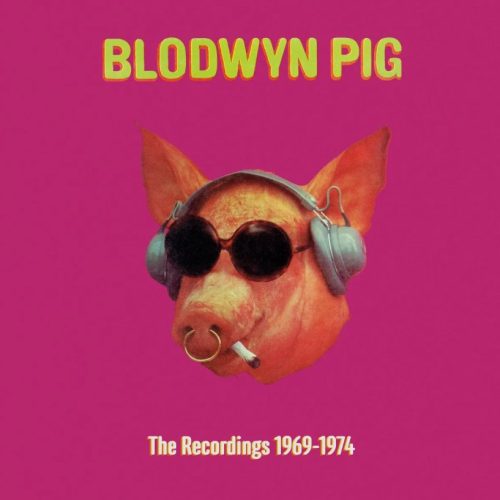
History sees Mick as a blip on the screen… but in ’68 he was a heavyweight mentioned in the same breath as Peter Green…
It shouldn’t take the passing of an artist from this world to rekindle interest in their music. But it often does, and perhaps that’s simply human nature. Personally, it never occurred to me that I should explore more of Mick Abrahams’ work while he was still with us, even though I was well aware he’d had major health problems for a while (and to be fair, I had listened to quite a bit of it over the years, in phases anyway.)
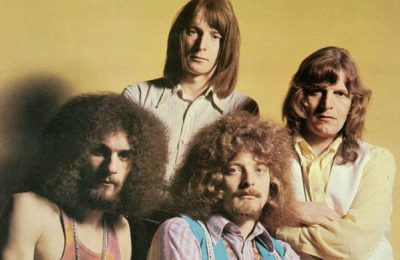
But here we find ourselves, with dear old Mick having sadly shuffled off at the age of 82 shortly before Christmas of last year, and leaving the world with one fewer Jethro Tull alumnus (and a founding one at that.) I’m hard pressed to think of a better way to acquaint (or reacquaint) oneself with Mick’s bluesing than with this pair of new reissues from Cherry Red’s Esoteric label that gathers together all of the material from his prime, providing the perfect bolstering of the early end of Tull-related shelves out there in collector land.
History has a funny way of filing Mick away as a Tull footnote, just a blip on the screen. But back in ’68, he was a heavyweight – the kind of player people mentioned in the same breath as Peter Green. The problem was, it took more than playing ability to be a functioning member of Jethro Tull. Word on the street is that he and bassist Glenn Cornick so disliked one another that they often couldn’t be in the same room. But the final straw, according to Ian Anderson, came when Mick claimed to be sick and a gig had to be cancelled, only to be spotted later that evening out for a night on the town with his girlfriend!
However, it wasn’t just these tiffs that led to the split after This Was; it was a total collision of visions. Anderson was already looking toward the more complex horizons of Stand Up, while Mick was a blues purist through and through, and suddenly it seemed Tull had two headstrong leaders in an outfit that could only withstand one. That friction eventually gave us Martin Barre on one end and Blodwyn Pig on the other, a band with a name so famously nonsensical that even Mick admitted it was just a ‘stoned suggestion’ from a friend that stuck. Hey, we’ve all been there.

Blodwyn Pig: The Recordings 1969-1974 is a set captures that brief, weird moment when Mick was actually giving his old band a run for their money. There’s a strange irony in the fact that their debut album Ahead Rings Out hit the shelves the exact same day as Stand Up in July ’69. While Tull were moving into folky, world music territory (even producing Fat Man, a song whose lyrics Mick allegedly took as a personal insult), the Pig were leaning into a heavy, brassy blues. You can hear the ‘what-if’ scenarios all over tracks like Sing Me a Song That I Know – it’s got that early Tull vibe, but Jack Lancaster’s sax work pushes it into a jazzier, underground space. Then we have The Modern Alchemist, where the band really stretches its legs; it’s a snappy, swinging bit of jazz-rock that feels like they’re trying to out-prog the competition before that term was even coined. Even on the more traditional Dear Jill, Mick’s slide work has a sultry, late-night quality that stays with you after the needle (or laser) moves on.

By their second album, Getting To This, Mick was clearly still sending a few signals back to the Tull camp, such as the flute-filled Variations On Nainos (a pretty transparent anagram for ‘Ian Son’). It’s a highlight for me, largely because of how the band handles the shift from an acoustic shuffle into a heavier, electric charge. The album also contains perhaps my favourite track Mick was ever a part of, in the form of See My Way, a driving blues-rocker with an Eastern-flecked breakdown section unlike anything else he did in… well, any band he was a part of (but the kind of thing his former partner Anderson might well have been into.) Despite the presence of one or two more inconsequential numbers (Long Bomb Blues feels like a bit of fluff, and To Rassman is a baffling misfire), Getting To This pointed in an interesting direction for Blodwyn Pig’s future, even opening side two with Lancaster’s hip, multi-part suite San Francisco Sketches. But the internal dynamics were already fraying. Between a fear of flying and some heavy-handed maneuvering by the rest of the band, Mick ended up walking the plank away from his own creation in the fall of 1970. Spoiler alert: the band’s attempts to continue without him quickly proved fruitless, despite the inclusion of fresh Yes departee Peter Banks.
All of this wonderful music is neatly bundled into a 3-disc clamshell boxed set (with an accompanying booklet featuring a newly-penned essay from Steve Pilkington) featuring bountiful bonuses: singles, non-album tracks, alternate versions, and the biggest draw for me – and immediate first spin – an entire disc of BBC performances, spanning the earliest days of the band in 1969 all the way to a reformed lineup in 1974.
‘Maybe Because’ shows a trend towards a Grateful Dead vibe which explodes into a spirited, Santana-esque second half that makes one pause and reflect—in immense frustration—why on earth this stuff isn’t better known…
This brings us to the second set of this review, Seasons: The Recordings 1971-1972, which covers the Mick Abrahams Band era and showcases the variation in sound Mick workshopped following the end of Blodwyn. On the 1971 self-titled record, he drops the heavy brass and goes for a wider, almost symphonic blues sound. You can hear this perfectly on Awake, a multi-layered anthem that boasts a strong, lengthy arrangement, while the bouncy Greyhound Bus provides Mick plenty of space for his licks in a rather catchy piece for the time (why oh why wasn’t this a single?) And, of course, the title track, Seasons, is a fifteen-minute journey that proves Mick had plenty of ‘prog’ in him, even if he didn’t want to call it that. It’s ambitious, sprawling, and honestly, quite beautiful in places, but it does make me wonder why Mick claimed to have no interest in music of this ilk.
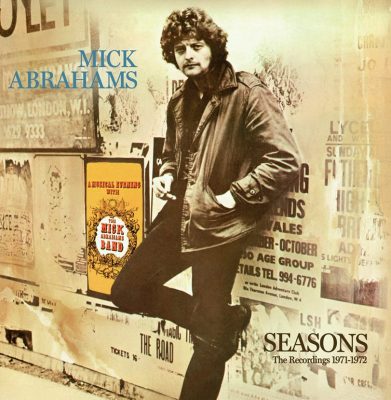
For the packaging nerds, the 1972 follow-up At Last is known for its original circular fold-out sleeve. It’s the kind of over-the-top presentation that shows Chrysalis really thought they might have a superstar on their hands (and I maintain they could have, with even more promotional effort.) Musically, it’s a fascinating hybrid – think Chicago’s horn sections meeting a British blues-rocker at full tilt – such as the joyous, toe-tapping Whole Wide World, or keyboardist Bob Sergeant’s belting, soulful Absent Friends. Meanwhile, a track like Maybe Because shows a trend towards a Grateful Dead vibe which explodes into a spirited, Santana-esque second half that makes one pause and reflect – in immense frustration – why on earth this stuff isn’t better known.
Both of these titles have been out of print for almost 20 years now, and it’s a relief to have them available again. The self-titled album has been on my want list for years, and I can say I’m delighted to finally have it myself, especially as part of this nice double CD package, in remastered sound, once again with a booklet essay from Pilkington, who knows his stuff.
These reissues don’t just fill a gap in a collection; they reclaim Mick’s spot as a vital architect of that late-60s British sound. He wasn’t just ‘the guy who left Tull’ – he was a musician with a restless soul who deserved a much bigger stage. It’s a bittersweet but necessary deep dive from Esoteric into a legacy that’s finally getting the spotlight it deserves. I honestly recommend both titles to any Tull fan, particularly those of the earliest period, who may need a reminder of what a powerhouse Mick Abrahams really was.




No comments! Be the first commenter?